10 April 2026


10 April 2026
27 March 2026
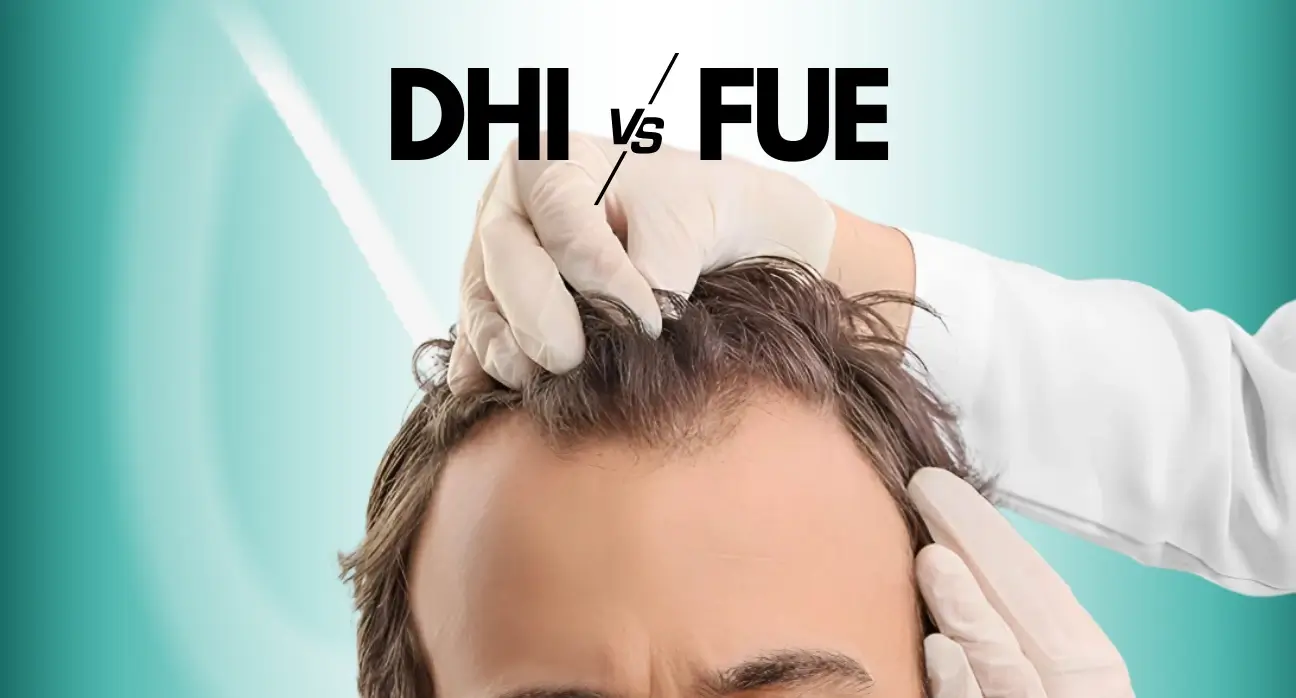
Choosing the right hair restoration technique can feel overwhelming when both DHI and FUE promise natural results. The truth is that each method has its own strengths and is suited to different needs. At Estetik International, both techniques are performed using advanced medical standards, and the right choice depends on your goals, your hair characteristics and the result you want to achieve.
Before comparing results, it helps to understand how each technique works.
FUE involves extracting individual hair follicles and implanting them into small incisions made in the receiving area. It is a widely used technique with proven results and allows for larger coverage in a single session.
DHI takes the concept of FUE further by combining extraction and implantation into one continuous process. Using a specialised implanter tool, follicles are placed directly into the scalp without the need for pre-made incisions. This gives the surgeon more control over depth, direction and angle. Learn more about the technique on the main DHI Hair Transplantation page.
Both techniques deliver natural-looking outcomes when performed by experienced specialists. The main difference lies in how much precision is required and what type of hairline the patient wants.
DHI offers exceptional control for creating refined, detailed hairlines. The ability to position each graft carefully helps achieve a softer, more natural transition in the frontal area. This is why many patients choose DHI when they want a sharp, clean and well-defined hairline.
FUE also produces natural results, especially for larger areas of thinning or broader zones of coverage. It is a strong option for those who need more grafts in a single session.
Density often determines how natural the final outcome appears. Because DHI places grafts without creating incisions first, grafts can be positioned closer together. This can lead to higher density in the treated area.
FUE can also produce good density, but it often requires more spacing because of the incision stage. For patients who want a compact, full look in the hairline or crown, DHI may offer an advantage.
For a closer look at how graft placement works with DHI, explore DHI Hair Transplantation.
Both techniques involve minimal downtime, but DHI is often reported as slightly more comfortable because the implantation process is controlled and highly precise. The absence of pre-made channels means less trauma to the scalp. As a result, patients often return to daily activities more quickly.
FUE has a straightforward recovery as well, though there may be slightly more swelling in some cases. The differences are small, but DHI’s technique lends itself to a smoother immediate post-treatment phase.
FUE procedures can be shorter when covering large areas because the implantation process is straightforward. DHI sessions tend to be longer because each graft is placed individually with an implanter pen. The additional time contributes to the precision of the result.
If the goal is quality over speed, DHI offers a more meticulous approach. If you need maximum coverage in a single session, FUE may be the preferred route.
DHI is ideal for:
FUE is ideal for:
During your consultation at Estetik International, the specialist will assess donor density, scalp condition and long-term goals to recommend the most suitable technique.
Which Method Gives Better Results Overall?
There is no universal winner. The best outcomes come from matching the right technique to the right patient. DHI excels in precision, natural hairline creation and density. FUE is excellent for coverage, versatility and efficiency. The expertise of the medical team plays the biggest role in determining the final result.
At Estetik International, both techniques are performed with advanced technology, ensuring safety, accuracy and long-lasting results. DHI and FUE each provide strong, natural and permanent solutions for hair restoration. The technique that will give you the best result depends on your hair characteristics and your aesthetic goals. If you want a refined, high-density hairline, DHI offers exceptional control. If your priority is broad coverage, FUE remains a reliable choice.
A personalised consultation at Estetik International will help you determine which method aligns best with your expectations and long-term confidence.
Both techniques involve extracting individual hair follicles, but DHI implants the follicles directly using a specialised implanter tool, while FUE places follicles into pre-made incisions. This gives DHI greater control over angle and density.
DHI often provides a more refined hairline due to the precision of the implanter tool. It allows for highly detailed placement, which is ideal for the frontal hairline.
Yes. FUE remains an excellent choice for patients who need a larger number of grafts or wider coverage. It is reliable, versatile and produces natural results when performed by experienced specialists.
DHI can achieve higher density in many cases because the grafts can be placed closer together without creating channels first. This makes it a strong choice for patients who want a fuller look in specific areas.
Both techniques provide relatively quick recovery, but DHI may be slightly more comfortable in the early stages because the scalp experiences less trauma during implantation.
Both procedures are performed under local anaesthesia and are generally comfortable. Patients report minimal discomfort with either method.
DHI is ideal for those seeking a detailed, natural hairline, increased density and minimal downtime. It suits patients with mild to moderate hair loss in concentrated areas.
FUE works well for patients with more extensive thinning who require a larger number of grafts. It is also a strong option for individuals looking for broad coverage.
Both DHI and FUE provide permanent results. Once the transplanted follicles take root, the hair continues to grow naturally.
Yes. When performed by trained specialists in a clinical environment, both DHI and FUE are considered safe and effective.
A consultation at Estetik International will assess donor density, scalp condition, hair loss pattern and long-term goals. The specialist will recommend the most suitable technique based on your unique profile.
Related reading: Hair Transplant Recovery in Summer: Myths, Tips & Real Results
Further reading: ISHRS (International Society of Hair Restoration Surgery)